
Embry-Riddle Launches STEM Teacher Training Initiative with Yavapai County

 Keaton S. Ziem
Keaton S. Ziem
/
Keaton S. Ziem
Apr 10, 2026, 8:13 AM
Embry-Riddle Aeronautical University has launched a new outreach initiative to strengthen science, technology, engineering and math (STEM) education across Yavapai County, Arizona, by training local teachers.
The effort, spearheaded by Dr. Mehran Andalibi, associate professor of Mechanical Engineering and director of Embry-Riddle’s Robotics, Automation and Rapid Prototyping Labs, creates what he describes as a “bridge” between the university, local schools and the Yavapai County Education Service Agency (YCESA). Yavapai is home to Embry-Riddle’s Prescott Campus.
“We have this strong engineering university here in Prescott,” Andalibi said. “The idea is to connect our faculty expertise and laboratory resources directly with local middle school and high school teachers, so they can take those skills back to their students.”
The pilot program began in January with a weekly course in computer-aided design (CAD) and 3D printing. Held in the STEM Education Center, the class, which ends in April, has drawn educators serving students in grades 7 through 12. About nine teachers enrolled in the first cohort, with participation expected to grow.
Through the program, educators are exposed to manufacturing tools such as laser engravers and cutters, water jet machines and computer numerical control machines.
“Many students don’t have the opportunity to explore emerging technologies like robotics, automation and AI in their classrooms,” said Tabitha King, Embry-Riddle’s STEM Outreach Manager. “This initiative is about bridging that gap and creating more equitable opportunities in STEM education by giving both teachers and students access to the tools, training and support they need to explore and engage with these high-demand fields.”
To support that effort, Andalibi’s team purchased six 3D printers for the course, funded through Embry-Riddle STEM Outreach resources and departmental support. YCESA has also committed to helping schools acquire equipment and software licenses where needed.
“We start with training the teachers,” he said. “They learn how to design parts in SolidWorks, an industry-standard CAD software, and immediately print them. Then they can go back and start clubs, and offer elective courses or projects in their own schools.”
Embry-Riddle student technicians are also assisting schools with equipment maintenance, including repairing 3D printers that had gone unused for more than a year.
The long-term goal, Andalibi said, is to expand STEM clubs and electives across the county by fall 2026, with the potential to reach several thousand students.
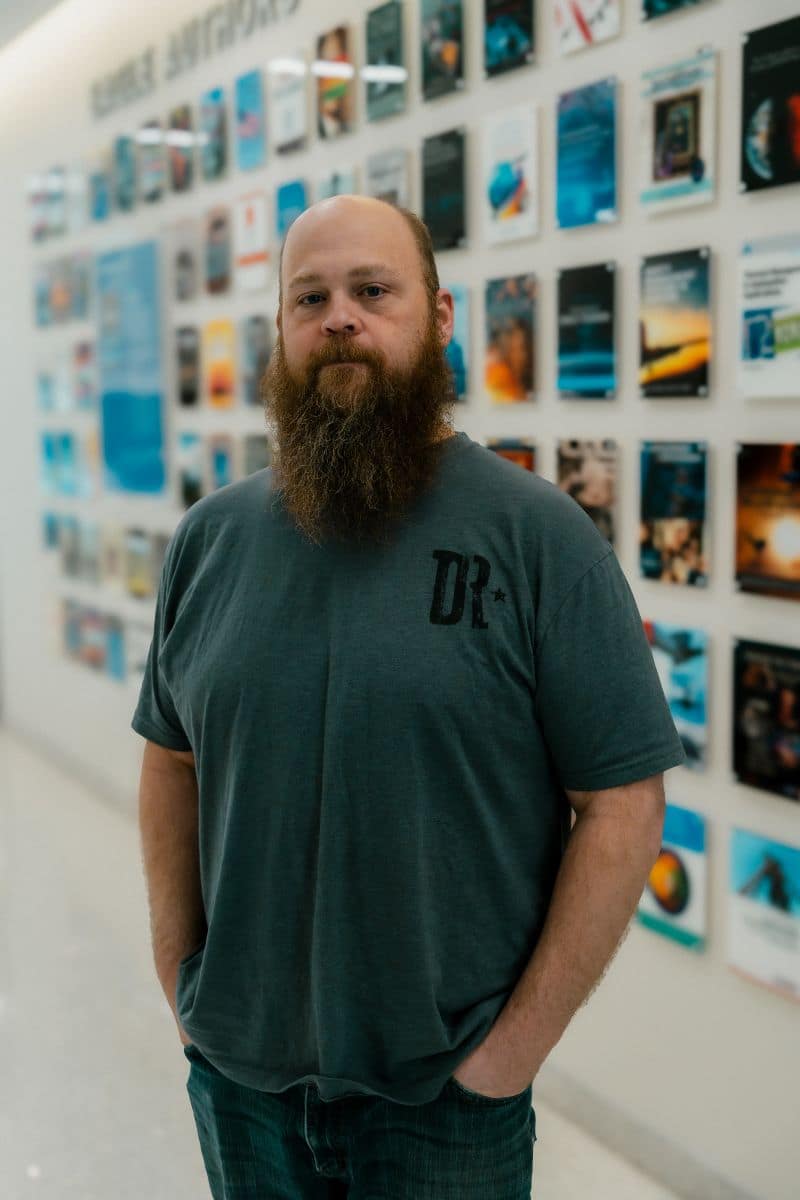 Andrew Lamer, a welding instructor at Bagdad High School, says STEM training at Embry-Riddle will help students build practical skills. (Photo: Embry-Riddle/Connor McShane)The initiative grew out of conversations between Andalibi and Yavapai County School Superintendent Steve King, along with a broader “Building Bridges” event that brought together education leaders and university representatives earlier this year.
YCESA has helped coordinate outreach and support teacher participation through professional development credit and, in some cases, stipends or substitute coverage.
“I am very grateful for the partnership we have formed with Embry-Riddle and the opportunities it will afford the students of Yavapai County,” Superintendent King said. “Having a world-renowned university in our county that offers so many programs in STEM education is very fortuitous, and I look forward to many years of helping the students of our county. I would also like to express my deep gratitude to Dr. Andalibi for his vision and hard work in making this happen.”
For participating educators, the sessions provide both technical training and new classroom opportunities.
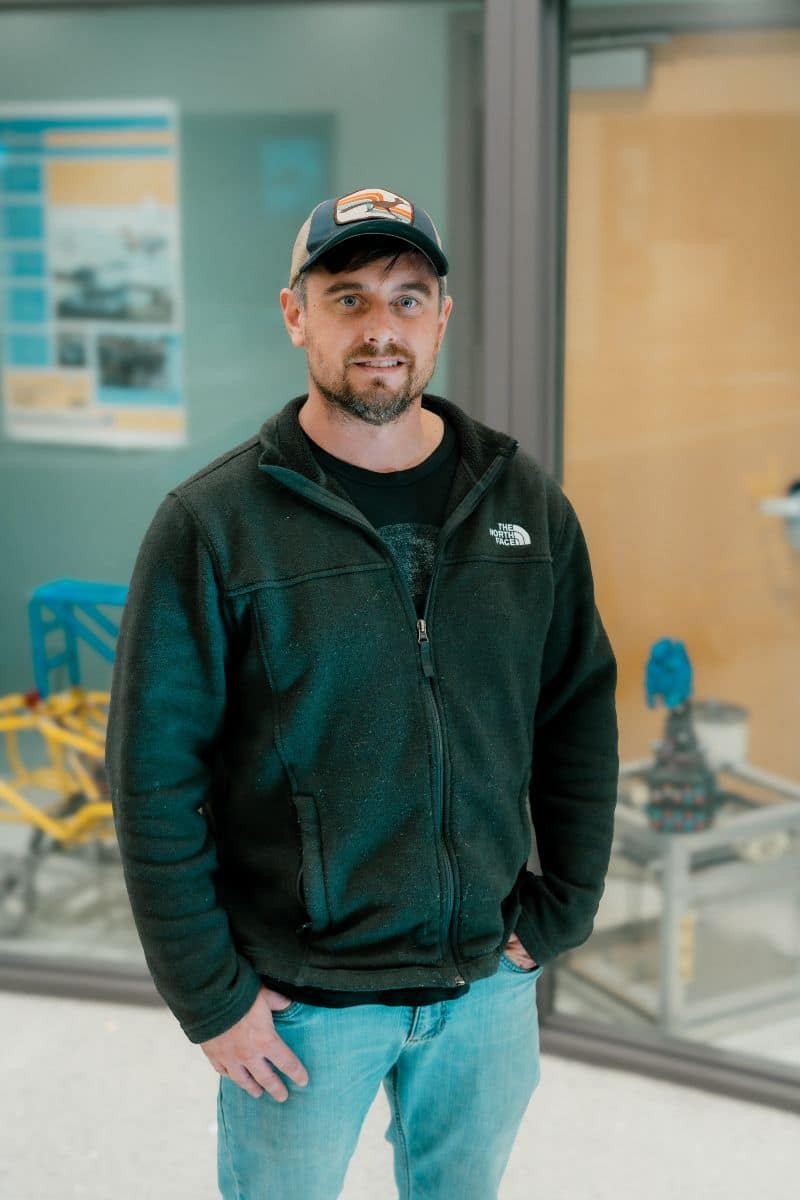 Ryan Parsons, a science teacher at Tri City Prep, says he is excited to bring STEM concepts back to his students. (Photo: Embry-Riddle/Connor McShane)Andrew Lamer, a welding instructor at Bagdad High School, said two 3D printers at his school had gone unused for years after staff turnover left no one able to operate them.
“I’ve always wanted to learn this and just haven’t had the opportunity,” Lamer said. “This gives me the chance to bring 3D printing in with the middle schoolers and high schoolers.”
Lamer said the training will help students build practical skills increasingly valued by industry.
“I’ve been a welding instructor for 20 years, and what companies are looking for is technical knowledge, but also computer skills,” he said.
Ryan Parsons, a middle school science teacher at Tri City College Prep, said limited access to equipment can be a barrier.
“A lot of the tools are hard to get,” Parsons said. “It’s always working with the technology that we have.”
He said the training will help give students more hands-on experience.
“Having them struggle with something and then break through on the other side — that’s the whole point,” Parsons said.
The course is currently a pilot program. Andalibi and his collaborators are preparing a proposal to the National Science Foundation that could provide up to $500,000 over three years to expand the effort. The team is also pursuing an additional $300,000 in local philanthropic support as a contingency.
Future phases could include additional training for Yavapai County middle and high school teachers in areas such as robotics, potentially beginning as early as fall 2026, Andalibi said.