
Six Embry-Riddle Students Honored in Aviation Week’s Prestigious 20 Twenties List
 Michaela Jarvis
Michaela Jarvis
/
Michaela Jarvis
Jan 06, 2026, 1:26 PM
A record six Embry‑Riddle Aeronautical University students have been named to the Aviation Week Network 20 Twenties Class of 2026, which recognizes outstanding aerospace-focused university students.
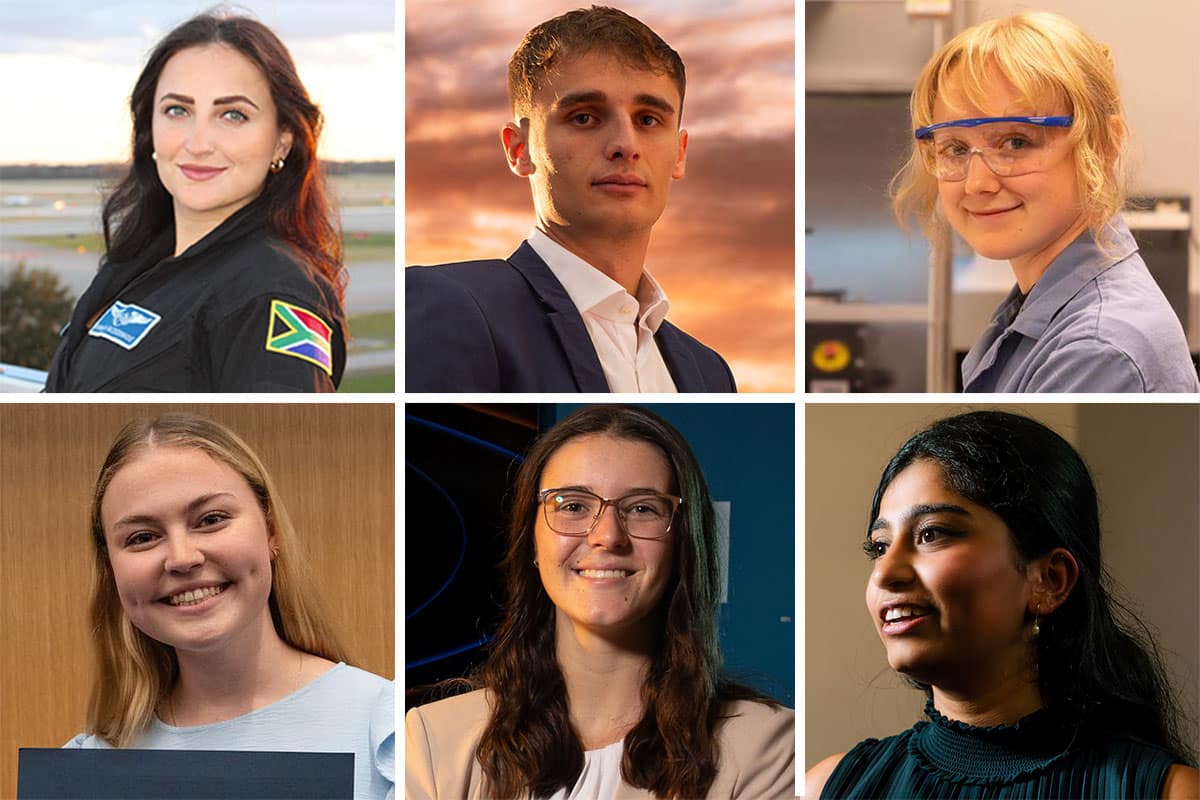
The program announced this week the selection of students Daniella Bezuidenhout, Emanuele Bossi, Natalie Brattain, Skylar Butler, Grace Gratton, and Spoorti Nanjamma to its 20-member 2026 class.
With six students named, Embry‑Riddle had the most students ever selected to a single class in the 13-year history of the 20 Twenties program, which identifies students with the potential to impact the aviation, aerospace and defense industries.
"We are so inspired by the achievements and potential of these exceptional students," Aviation Week President Greg Hamilton said in the announcement of the 2026 class.
Students from 20 schools across 13 countries competed for distinction in the 20 Twenties Class of 2026. Awardees were selected based on their academic record, research and design projects, ability to overcome personal struggles and record of giving back to their communities.
“Embry-Riddle is honored to have a record six students named to Aviation Week’s 20 Twenties Class this year,” said Embry-Riddle President P. Barry Butler, Ph.D. “This recognition reflects the exceptional talents of these students and underscores Embry-Riddle’s commitment to preparing the next generation of leaders across the aviation, aerospace and defense industries. Congratulations to all six awardees on this distinguished recognition.”
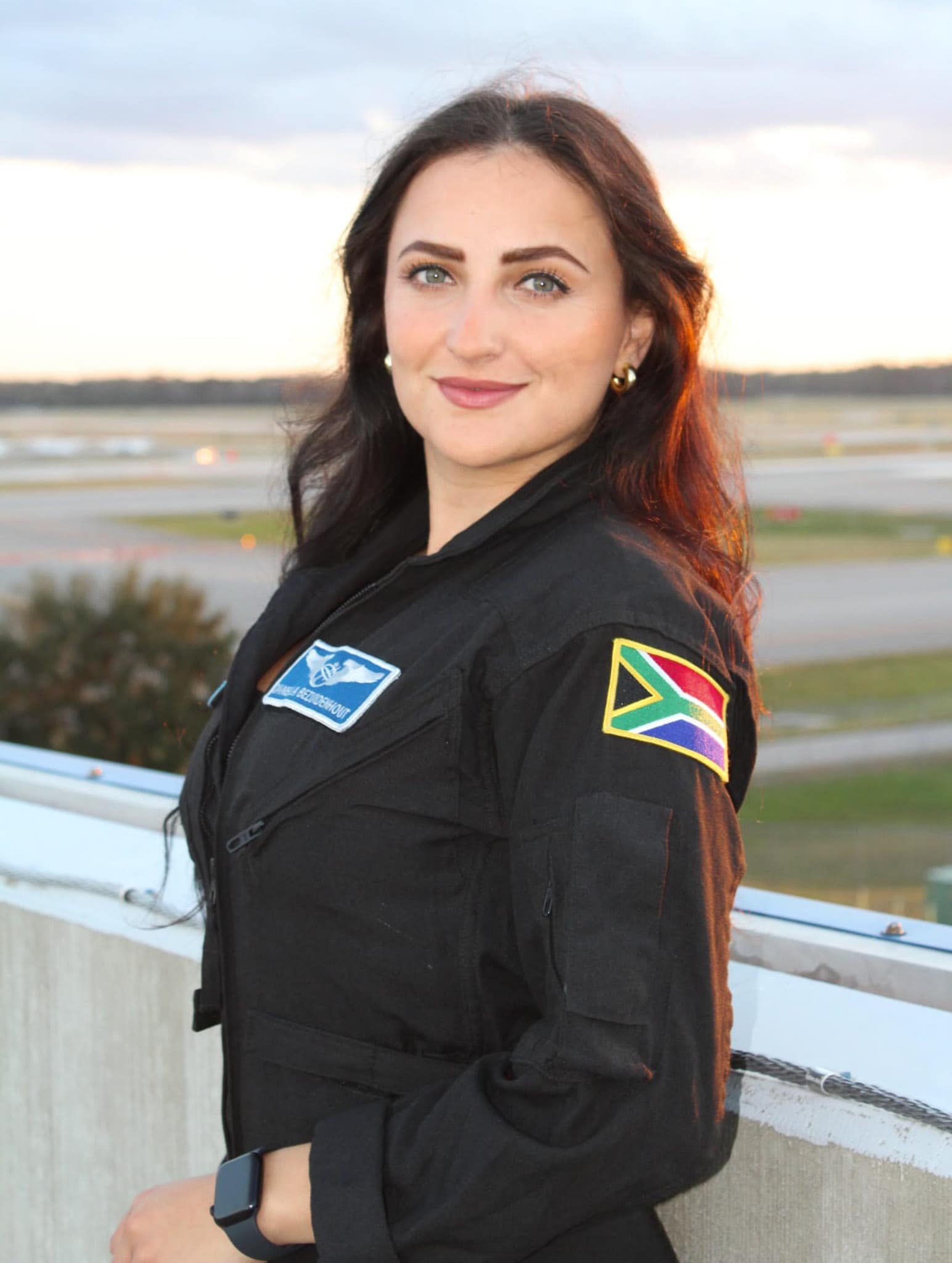
Daniella Bezuidenhout (Photo: Astrid Senko)
Daniella Bezuidenhout, who is completing a master’s degree in Aerospace Engineering, said being named to the 20 Twenties “signals to the broader aerospace community that my contributions matter.” Being included in the list also connects Bezuidenhout “to an inspiring group of peers, and creates opportunities for collaboration, mentorship and impact," she said.
From South Africa, Bezuidenhout hopes to become the country’s first female astronaut. Her steps along the way include serving as the women’s empowerment lead for Embry-Riddle’s Women’s Ambassadors program, tutoring and mentoring peers, working as graduate teaching assistant and performing a service role as a citizen-science astronaut candidate with the International Institute of Astronautical Sciences.
Bezuidenhout’s research on rotor noise prediction for emerging aircraft such as advanced air mobility vehicles, conducted through the NASA University Leadership Initiative, aims to help engineers design quieter aircraft.
“I aim to ensure that the vehicles promising to revolutionize mobility are not only feasible, but welcome,” Bezuidenhout said, “because in the end, the success of aerospace technology is measured not just in altitude or speed, but in whether it earns its place in the skies we all share.”
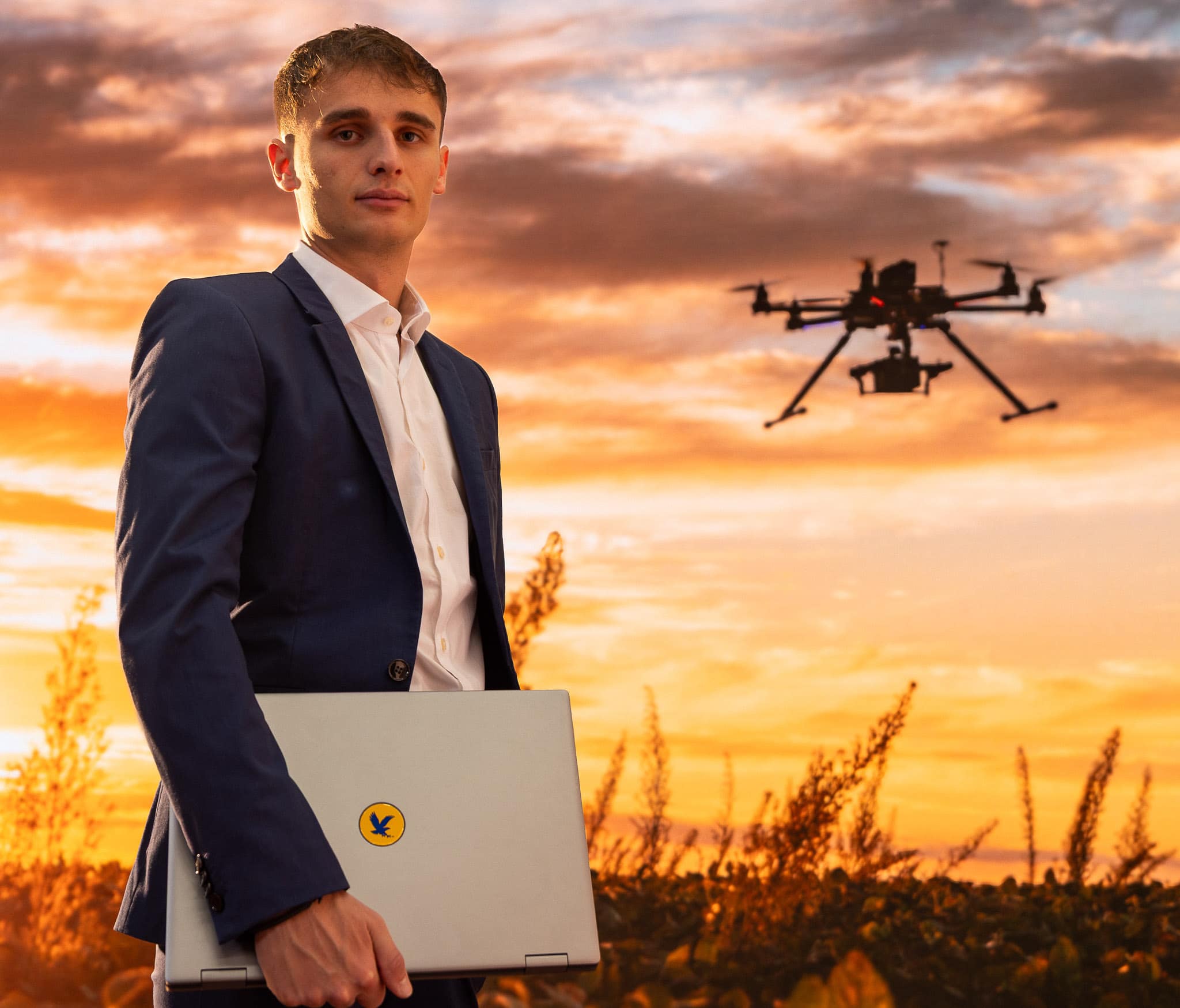 Emanuele Bossi (Photo: Embry-Riddle/Wilson Van Ness)
Emanuele Bossi, a senior majoring in Software Engineering and Data Science with a minor in Mathematics, said his inclusion in the 20 Twenties “will help amplify my voice and my work as I pursue a research-driven career in aerospace and complex systems,” adding that the recognition is not only personal, but “a reflection of the people and mentors who shaped my path.”
Bossi came to the United States from Italy at age 18, after training in competitive soccer from an early age. Although his dream of going professional was dashed by a tear of his anterior cruciate ligament, Bossi said the injury propelled him to broaden his academic and professional horizons, “seeking fields where problem-solving, creativity and persistence could have meaningful impact.”
The broadly defined direction of Bossi’s research involves leveraging mathematical tools “to extract structure from complex, real-world systems and translate that understanding into actionable insight.”
His work on data-driven examination and control of complex dynamical systems can be applied to networks in aviation, power grids, biological systems, social interactions and even the spread of information or disease. Bossi competed in last year's Invent for the Planet challenge, as part of a team that proposed an AI-power agriculture system designed to conserve water and fertilizer, reduce environmental damage and increase crop yields, while improving farmers’ resilience to a shifting climate.
Natalie Brattain is majoring in Aerospace Physiology to design ways to protect astronaut health, focusing on human physiology, nanotechnology and spaceflight operations. She is a senior and was named a Goldwater Scholar in 2025.
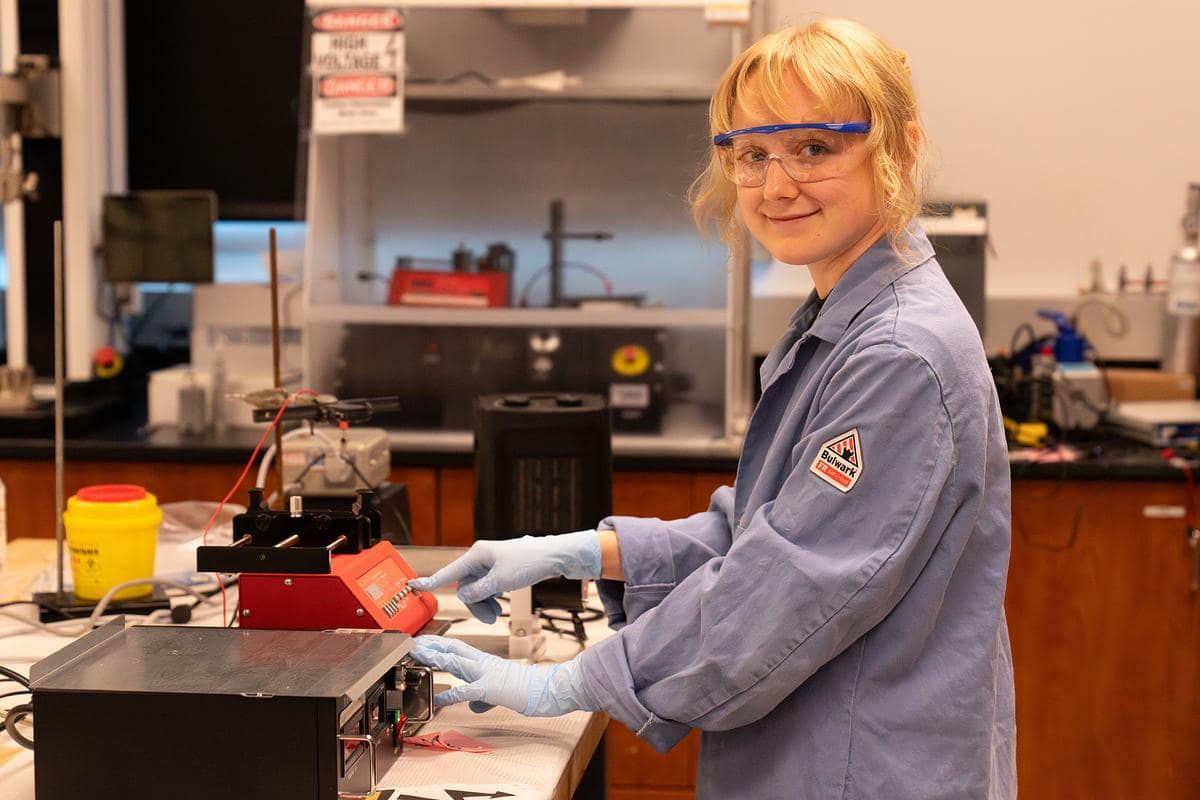
Natalie Brattain (Photo: Embry-Riddle/Bernard Wilchusky)
Her main project involves the effect of spaceflight on astronauts’ vision, which is often impaired by intraocular pressure. She has developed a wearable, high-sensitivity biosensor to monitor that pressure using a self-healing polymer for which she proposed and implemented a fabrication method, demonstrating the potential of such materials for a range of biosensing applications.
She has also served as a co-lead on a project to build an International Space Station lab investigating the effects of UV and cosmic radiation on the genetics, cell structure and reproduction of tardigrades. Tardigrades are small invertebrates that are able to tolerate extreme environments, including high levels of radiation, and have been used in space experiments and studies of animal survival in space.
A first-generation student, Brattain worked diligently to adjust to college life and to do research.
“With no instructions, no guaranteed results and a lot of trial and error, I struggled at first. There were moments when I felt completely lost,” she said, adding that her challenges propelled her to create the Aerospace Physiology Peer Mentorship Program. “Looking back, each obstacle has shaped me into someone who doesn’t easily give up. Instead of letting challenges stop me, I’ve used them to build resilience and create opportunities for others," she said.
Skylar Butler, a senior majoring in Astronomy and Astrophysics and Space Physics, has set her sights on combining theoretical physics with “policy-relevant or real-world applications.”
“I want to help push the boundaries of what we as humans know, and to hopefully be a professor to help mentor the next generation of scientists,” Butler said.
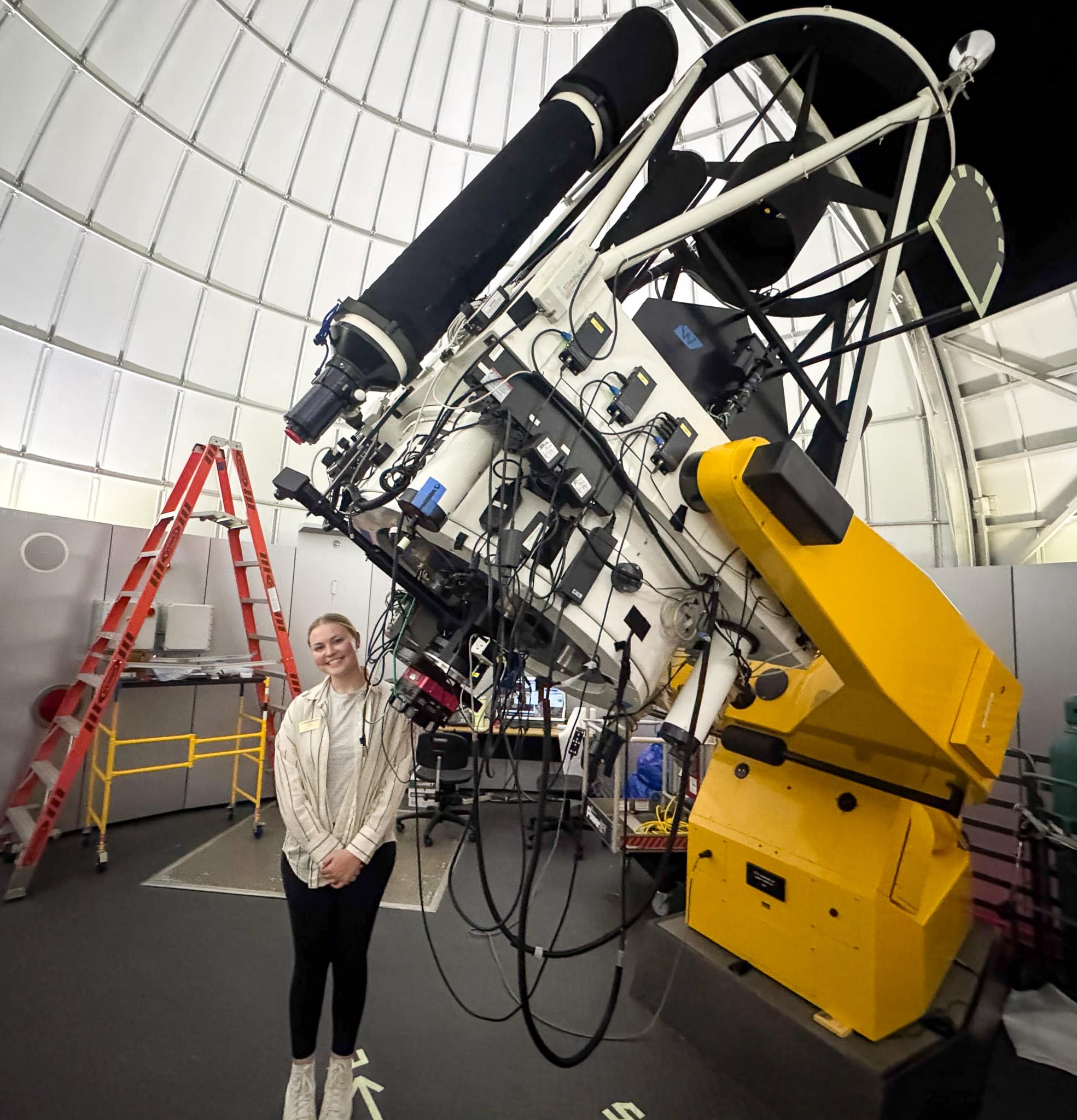
Skylar Butler (Photo: Jason Aufdenberg)
Her inclusion in the 20 Twenties class, she said, will help her “by fostering confidence and reminding me that I am part of a community so much bigger than myself that values excellence, resilience and service.”
Her research projects, begun the summer after her freshman year, have involved modeling asteroid disruption dynamics and determining the age of star clusters, among other topics. In 2024, she was awarded a grant to travel to the European Organization for Nuclear Research (CERN) to study particle physics interactions in core-collapse supernova simulations.
In her first semester at Embry-Riddle, Butler suffered an injury to her leg that required two surgeries, extended medical withdrawal and a return to school with a knee scooter and an intravenous antibiotics port.
Nonetheless, she persevered and excelled.
“Despite being sick my first two years of college, I accomplished my dream of being a researcher,” Butler said. “I won four research grants, advocated for research and mentorship, published four papers, presented at 11 poster sessions and obtained two industry internships.”
Grace Gratton, a junior majoring in Space Physics with a minor in Applied Mathematics and Computer Science, has conducted research in two separate areas: systems engineering and solar wind research.
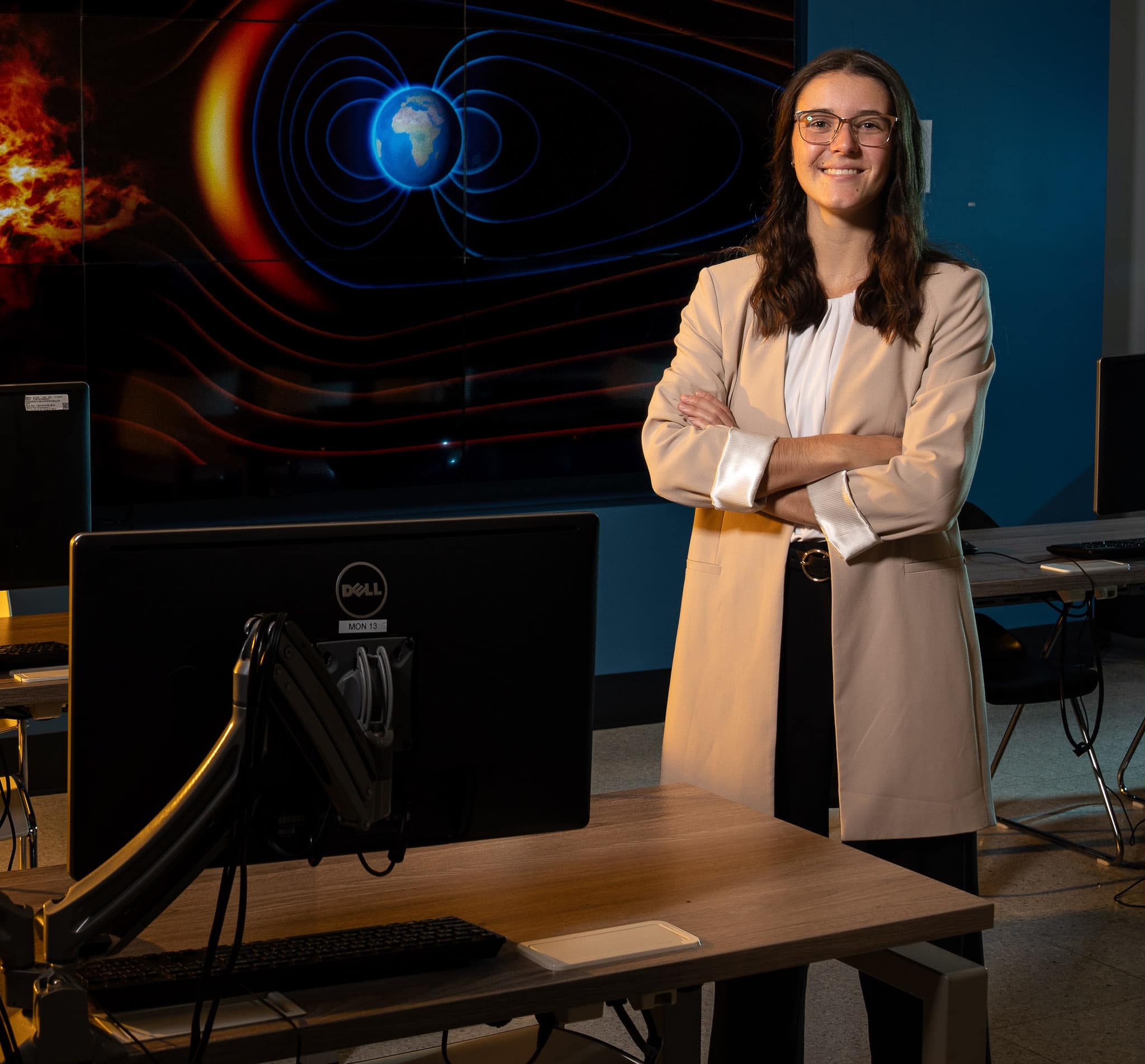
Grace Gratton (Photo: Embry-Riddle/Bill Fredette-Huffman)
Named a Goldwater Scholar and an Astronaut Scholar in 2025, Gratton helped develop an algorithm for multi-agent systems such as drone swarms or satellite networks. The algorithm is based on the synchronous hatching of giant South American river turtles, a phenomenon involving distributed decision-making across multiple agents that communicate and collaborate to achieve a shared goal.
The algorithm assures consensus even when agents are compromised, meaning it could safeguard drone swarm missions or satellite swam operation.
“My work contributes to ensuring the security, reliability and effectiveness of the multi-agent systems our nation increasingly depends on,” Gratton said.
More recently, Gratton is studying the effects of solar wind on satellites, with significant implications for the aerospace, aviation and defense industries.
Gratton said being a woman in a male-dominated environment has posed obstacles she had to surmount.
“When someone doesn’t believe I am capable, the best way I can prove I am is by showing them through action,” she said. “This has taught me to be confident in my identity, to persevere through doubt and to act firmly but be flexible.”
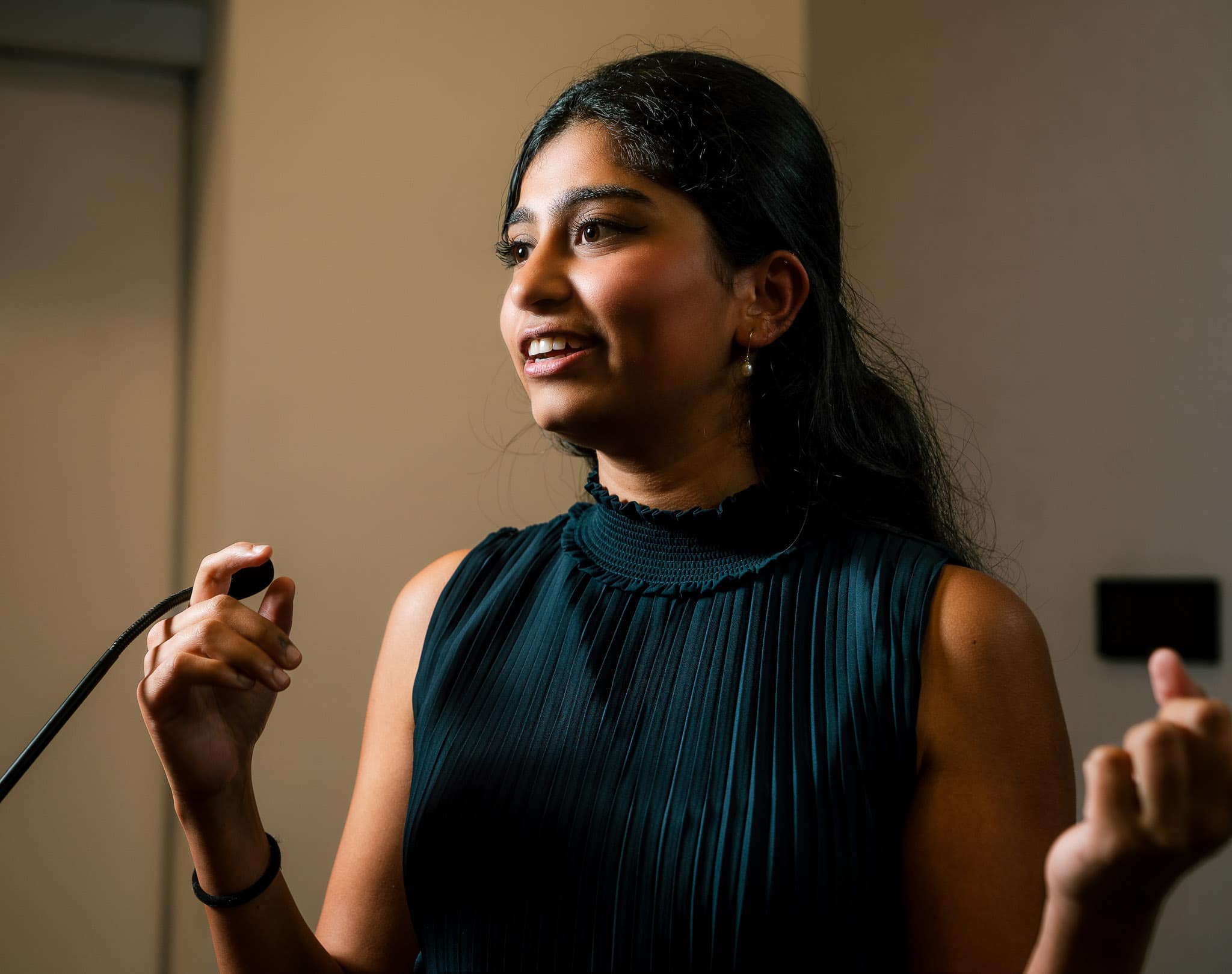
Spoorti Nanjamma (Photo: Joseph M. Harrison)
Spoorti Nanjamma, who is earning a master’s degree in Systems Engineering, said that as an international student, “having my work shared with top leaders across the aerospace industry is incredibly motivating and has opened new doors for me, which encourages me to keep aiming higher.”
Her research projects include an investigation into where biologically inspired design has been applied to satellite systems and its potential in new applications. Nanjamma is also working on a cube satellite mission, writing and developing the mission requirements and incorporating model-based systems engineering as the requirements lead, as well as collaborating with the technical teams to ensure consistency, traceability and regulatory compliance.
Having grown up in a small village in India, she worked multiple jobs when she began at Embry-Riddle, while also conducting research and adopting leadership roles.
Nanjamma, whose parents run a small school, said she hopes that students in her village are inspired by her journey.
“I hope my story helps them believe in themselves a little more and encourages them, especially young girls, to see possibilities beyond the limits often placed on them by society and to believe that they, too, belong in STEM if that’s their passion,” she said.