
Embry-Riddle Ph.D. Student Flies High in Academia — and in an F-16

 Michaela Jarvis
Michaela Jarvis
/
Michaela Jarvis
Mar 18, 2026, 9:43 AM
In his second year as a Ph.D. student at Embry-Riddle Aeronautical University, Seur Gi Jo published three research papers on three different space operations topics in top-rated scientific journals. He attributes that rare feat at least partly to another of his roles — serving as an F-16 fighter pilot in the Republic of Korea Air Force.
Having logged more than 1,200 flight hours, Jo said, “Flying has been one of the most formative experiences of my life, shaping both my discipline and my perspective on aerospace systems.”
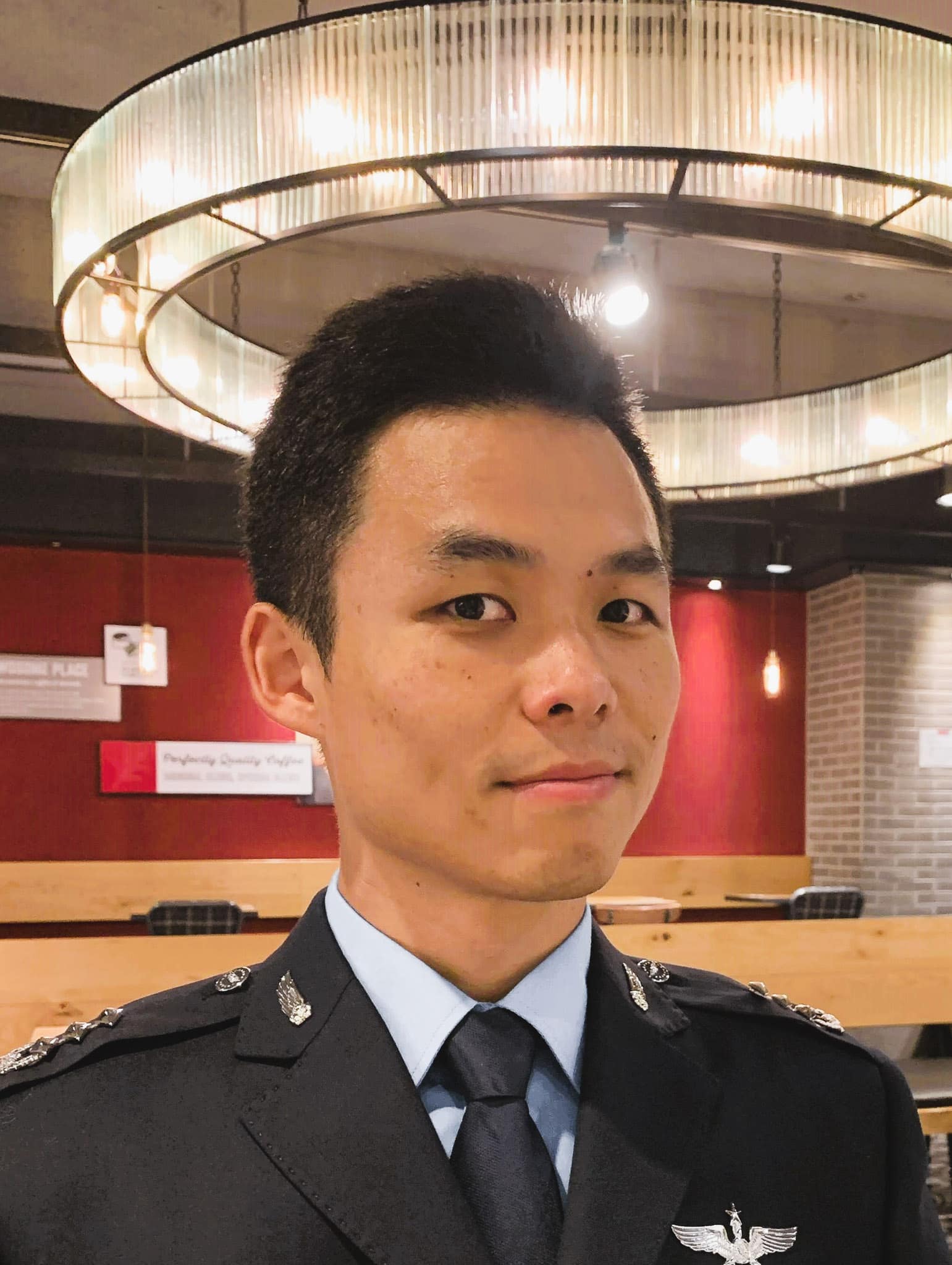
Jo, seen here in his uniform, is a fighter pilot in the Republic of Korea Air Force. (Photo: Seur Gi Jo)
The air force major came to Florida to earn his master’s and doctoral degrees in Aerospace Engineering at Embry-Riddle’s Daytona Beach Campus through a competitive overseas education program for Korean air force officers. He chose Embry-Riddle from among several universities because of its strong reputation in aerospace engineering and because its graduate program is highly ranked, he said, adding, “I was also looking forward to Florida’s sunny weather.”
Jo’s research focuses on improving the precision and efficiency of space missions in the cislunar region, the region between the Earth and the moon, where gravitational forces from both affect spacecraft. The research involves complex calculations involving such technologies as multidimensional mapping, onboard sensing and novel algorithms to advance current methods as missions to cislunar space increase in number. Jo also has a fourth paper being considered for journal publication.
The son of two elementary school teachers, Jo planned to study mathematics in college and become a mathematician or professor. After attending an information session about the Republic of Korea Air Force Academy, he decided to apply. He graduated and commissioned as an officer in 2010. After commissioning, he received an opportunity to train for about five months in Texas and Mississippi.
“During that time, my family stayed with me, and we created many wonderful memories in the United States,” said the father of two. “Because of those positive experiences, I later decided to apply for the overseas education program. Our whole family has been enjoying our life in the United States.”
In the first year of his master’s program at Embry-Riddle, Jo took a class called Spacecraft Attitude Dynamics with Dr. David Canales, assistant professor in the Department of Aerospace Engineering.
“His passion for research and deep insight into astrodynamics inspired me,” Jo said, “and he kindly invited me to join his research group. With his guidance and mentorship, we have published three journal papers so far, and we certainly see this as just the beginning. There is still much to explore in cislunar dynamics and spacecraft control, and I am excited to continue pushing the boundaries of this research.”
Canales said that what sets Jo apart as a researcher is “his intrinsic motivation.”
“He works on problems deeply, understanding and advancing them,” he said.
Canales added that Jo’s work ethic is “outstanding.”
“He is consistent, proactive and one of the most highly accountable persons I know. His ability to stay committed while maintaining high standards has been central to his continued success. My success in securing grants has partly been thanks to his advances,” he said.
When Jo completes his Ph.D., he said he will return to the Korean air force “to apply the knowledge I gained” at Embry-Riddle to support the Republic of Korea’s expanding space operations and defense initiatives.