
Embry-Riddle Professor Leads $7.2 Million Space Weather Research Project

 Michaela Jarvis
Michaela Jarvis
/
Michaela Jarvis
Feb 23, 2026, 8:05 AM
Severe weather, such as hurricanes and thunderstorms, can send atmospheric waves blasting upward, where they roil and ripple a layer of the atmosphere known as the ionosphere. These disturbances can disrupt important communication and navigation systems.
Now, in a $7.2 million project funded by the U.S. Office of Naval Research, researchers led by an Embry-Riddle Aeronautical University professor are exploring the sources of the waves, how they change as they travel upward through the atmosphere and their effects on the ionosphere. The researchers are using data and building simulations to broaden the understanding of the phenomenon.
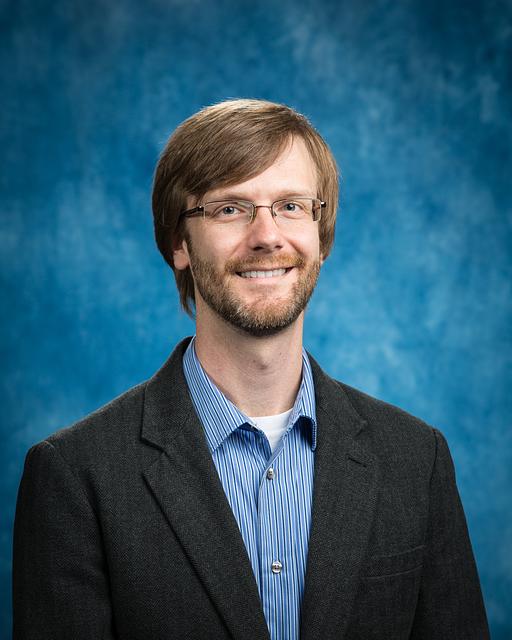
Dr. Matthew Zettergren, professor in Embry-Riddle’s Department of Physical Sciences and a research faculty fellow at the university’s Center for Space and Atmospheric Research (CSAR), is leading the project. (Photo: Embry-Riddle)
“The myriad effects these waves, called gravity waves, have on the ionosphere, particularly their strong effects on radio propagation and positioning and navigation systems, cannot be reliably reproduced in current simulations,” said Dr. Matthew Zettergren, who is leading the project and is a professor in Embry-Riddle’s Department of Physical Sciences and a research faculty fellow at the university’s Center for Space and Atmospheric Research (CSAR).
Zettergren said that when atmospheric waves from severe weather travel up into the ionosphere, a layer of the Earth’s atmosphere containing ions and free electrons, the waves create patterns in the density of the charged particles.
Global models of the currents that circulate in the atmosphere do not “cover the full spectrum of types of waves emerging from sources like weather,” Zettergren said. Also, the small- to medium-size weather-caused waves contract, lengthen, dissipate and are affected by larger influences like atmospheric tides as the waves travel upward, “which further complicates accurate descriptions of them," he said.
This project is combining three different models to help characterize the gravity waves. The models include one of local weather patterns, such as clouds, storm systems and heating; one simulating wave dynamics; and one of the ionosphere that can “describe the wave interactions with plasma and associated instabilities that occur and can impact radio signals,” Zettergren said.
“The project moves us toward more reliable forecasting of ionospheric conditions and better estimates of potential adverse impacts,” said Engineering Physics Ph.D. candidate Björn Bergsson, who is working with Zettergren. Bergsson said such forecasting will become increasingly important “as more everyday systems depend on reliable Global Navigation Satellite System operation, such as autonomous vehicles and drones.”
“My role,” said Bergsson, “is to compare our computer simulations with real-world measurements” from the GNSS antennas stationed around the country that can detect the disturbances in the ionosphere. “Key relationships are still not well understood, particularly how storm intensity, background atmospheric conditions and wave propagation together control the occurrence and severity of the resulting ionospheric disturbances.”
Bergsson said the project, which involves four other institutions — Arizona State, Boise State, Boston University and the University of Miami — is “a fantastic opportunity to work with big-data observations and state-of-the-art physics-based modeling, collaborating with scientists at different institutions across the United States.
“Through this project, I will expand my expertise in high-performance computing, atmospheric and space weather data analysis and model-data validation – the same tools used in a research career in government labs, industry or academia," Bergsson said.
Dr. Jeremy Ernst, vice president for research, commended Zettergren and the Center for Space and Atmospheric Research on the “impactful contributions in space science” represented by the project.
“This is an incredible example of how the Center for Space and Atmospheric Research and Embry-Riddle continue to be true leaders in the field,” Ernst said.
Other Embry-Riddle researchers working on the project include research associate Dr. Jaime Aguilar Guerrero, research scientist Dr. Shantanab Debchoudhury and postdoctoral research scholar Dr. Pralay Raj Vaggu.